Clinical Waste Disposal Melbourne: What It Costs in 2026

Clinical Waste Disposal Melbourne: What It Costs in 2026

Per-collection rates for every clinical container size, the treatment rules that set the floor, and the configuration mistakes that inflate medical waste bills.

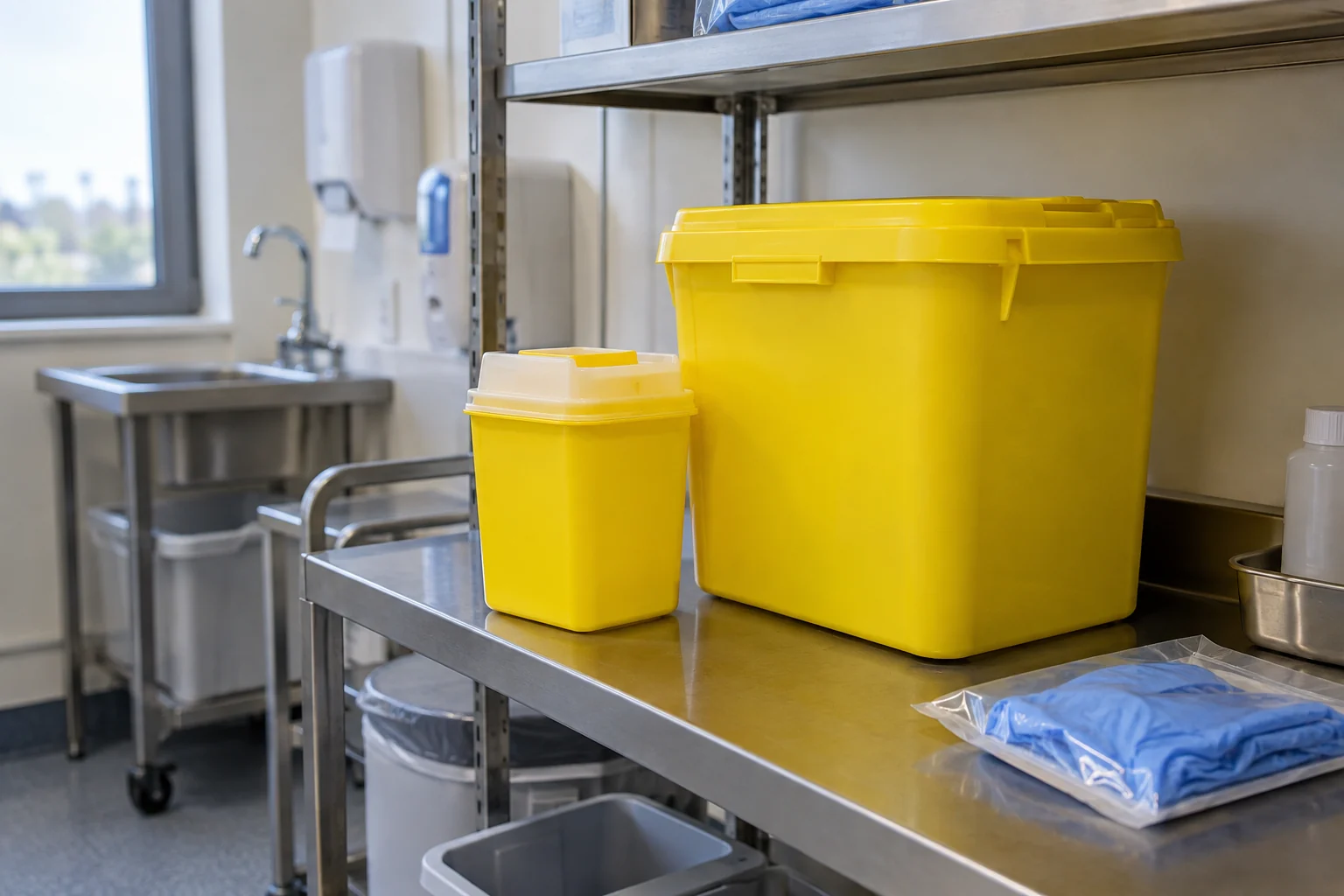
Clinical waste disposal in Melbourne costs $12–20 per 10L bin collection, $35–55 per 60L, $85–130 per 240L, and $180–280 per 660L in 2026, with sharps containers from $8–15 (5L) and cytotoxic waste at a premium ($35–55 per 20L). Rates reflect mandatory licensed transport and treatment — clinical waste can't go to ordinary landfill untreated. Here are the full container rates, the compliance floor, and the three configuration mistakes that inflate most medical waste bills.

2026 clinical waste rates by container

ContainerTypical Melbourne rate (per collection)
10L clinical bin$12–20
20L clinical bin$18–30
60L clinical bin$35–55
120L clinical bin$55–85
240L clinical bin$85–130
660L clinical bin$180–280
Sharps container 5L$8–15
Sharps container 23L$20–35
Cytotoxic 20L$35–55

Accounts are usually priced as a service schedule — containers × frequency — plus possible line items for bin rental, documentation and minimum-visit charges. Cytotoxic waste (purple stream) always prices above ordinary clinical waste because it requires high-temperature incineration.

The compliance floor: why clinical waste can't be cheap

Clinical and related waste in Victoria has to move through licensed clinical waste transporters to licensed treatment — typically autoclave sterilisation or incineration — before anything reaches landfill. The framework (Environment Protection Act 2017 and the clinical waste guidance under it) makes generators responsible along the whole chain, and the general environmental duty carries corporate penalties up to about $2.03 million. The details, stream definitions and segregation rules live in our clinical waste management regulations guide — and the treatment-route economics are compared in incineration vs autoclaving.

The three configuration mistakes that inflate clinical bills

  1. Everything in the yellow bin. Clinical waste rates are multiples of general waste rates. When gloves-and-gauze general rubbish, packaging or paper travels in clinical containers, you pay clinical treatment prices on ordinary waste. Tight segregation at the point of generation — clearly signed bins, staff training — is the single biggest saving in most clinics.
  2. Oversized containers on autopilot schedules. A 240L clinical bin collected weekly at $85–130 when a 120L at $55–85 would do, or fortnightly frequency where monthly suffices — schedule drift compounds quietly. Frequency is negotiable; clinical volume is usually predictable.
  3. Sharps on premium ad-hoc callouts. Exchange-based sharps programmes on a schedule cost a fraction of on-demand swaps. Container sizing matters here too — our sharps container size comparison maps volumes to the right unit.

Who this applies to — beyond hospitals

Clinical waste obligations reach far past hospitals: GP and dental clinics, vets, aged care and NDIS providers, tattoo and beauty studios, pathology collection rooms, pharmacies and first-aid rooms in ordinary workplaces. Sector-specific walkthroughs: medical & dental clinics and aged care & NDIS.

Benchmarking a clinical account

Clinical waste is one of the most custom-quoted, least benchmarked streams in Melbourne — small clinics in particular tend to sign the first specialist quote they receive and renew it for years. The audit sequence: verify each container's rate against the table above, check the schedule against actual fill levels, confirm segregation is keeping ordinary waste out of clinical containers, then run competitive quotes. Bundle Waste does all four in a free waste audit, benchmarked across 50+ providers — no savings, no fee. General waste and recycling for the same site are covered in our healthcare waste service.

Frequently asked questions

How much does clinical waste disposal cost in Melbourne?+
Typical 2026 rates per collection: 10L bin $12–20, 60L bin $35–55, 120L bin $55–85, 240L bin $85–130, 660L bin $180–280. Sharps containers run $8–15 (5L) and $20–35 (23L); cytotoxic waste prices higher ($35–55 per 20L) because it requires incineration.
Why is clinical waste so expensive compared to general waste?+
It legally requires licensed clinical transporters and treatment — autoclave sterilisation or incineration — before landfill, and generators remain responsible along the whole chain under Victoria's Environment Protection Act framework. Treatment infrastructure, not collection, is most of the cost.
What's the biggest saving available on a clinical waste bill?+
Segregation. Clinical rates are multiples of general waste rates, so every kilogram of ordinary rubbish travelling in clinical containers is billed at clinical treatment prices. Signed bins and staff training at the point of generation typically cut clinical volumes materially — then right-size containers and frequency to the reduced volume.
Do small clinics and beauty studios need clinical waste services?+
Yes — clinical and sharps obligations apply to any premises generating the waste: GP and dental clinics, vets, tattoo and beauty studios, pathology rooms, pharmacies, aged care and NDIS providers, even workplace first-aid rooms with sharps. Small generators use small containers (10–20L, 5L sharps) on scheduled exchange.
What is cytotoxic waste and why does it cost more?+
Cytotoxic waste — contaminated by chemotherapy drugs and similar substances, collected in purple containers — must be destroyed by high-temperature incineration rather than autoclaving. That treatment route makes it the most expensive clinical stream, typically $35–55 per 20L container in Melbourne.
How often should clinical bins be collected?+
Match frequency to actual fill and storage rules rather than a default weekly schedule — clinical volumes are usually predictable, and stepping a half-full 240L weekly service down to fortnightly, or downsizing the container, saves immediately. Storage time and odour limits set the floor for putrescible clinical streams.

Related guides

See what you could save

Send us a recent waste invoice. We'll benchmark every charge against a network of Melbourne providers and show you the savings — free, no obligation, no win no fee.

Get Your Free Waste Audit →