 Bundle Waste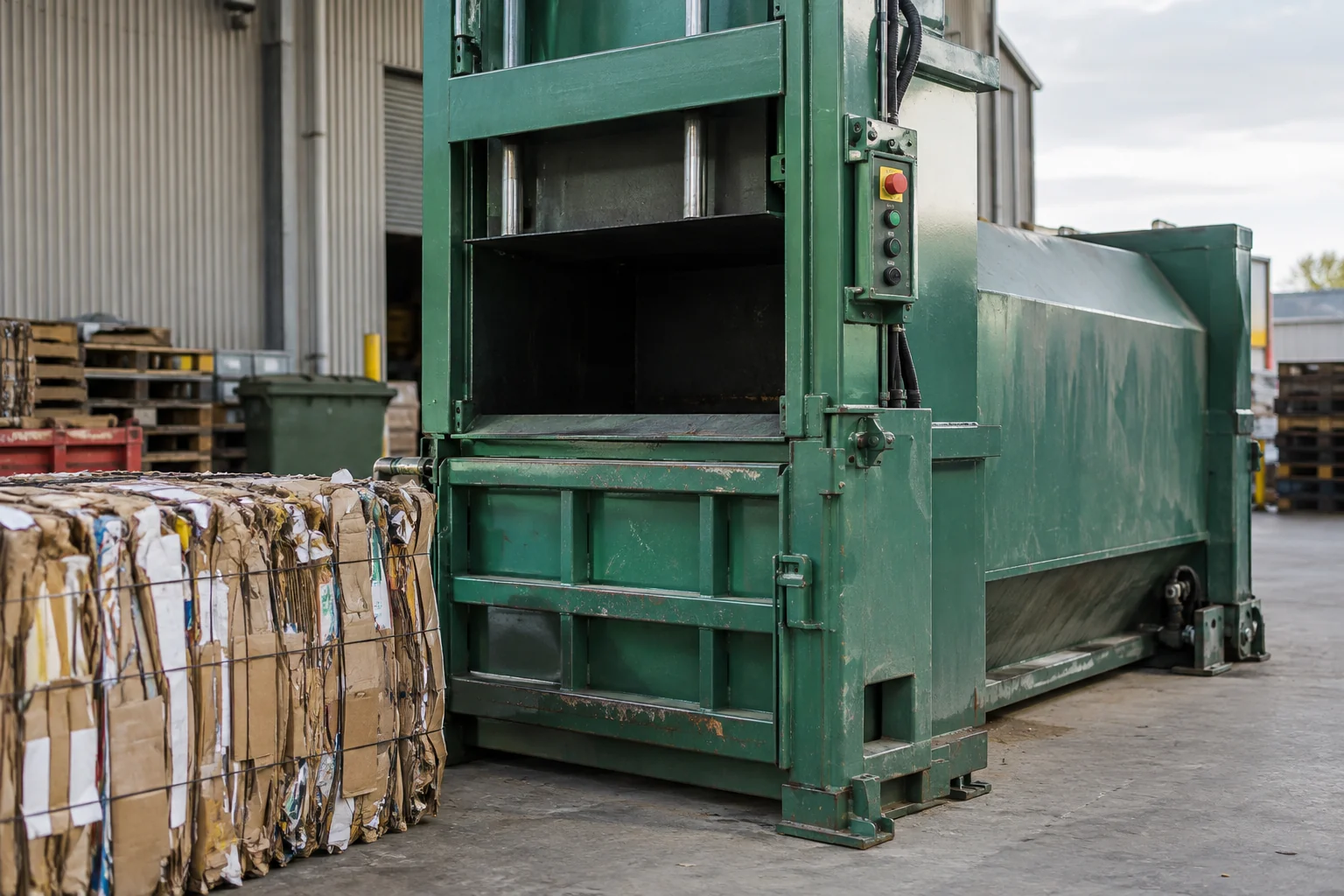
Hiring a static waste compactor in Melbourne costs $650–1,500 a month on Bundle Waste's 2026 benchmarks, before the cost of emptying it. A compactor pays for itself when it removes enough lifts of loose bins to cover that rental: a site running two or more 4.5 m³ front-lift bins on weekly collection ($340–650 a month each) is usually at that point; a site with one 1100L bin never is. From 1 July 2026 the City of Melbourne also charges 75 cents per kilogram for waste put through its shared hub compactors, which makes owning the compaction step, or avoiding it, a live question for CBD businesses.
What compactor hire costs in Melbourne (2026)
| Item | Melbourne range 2026 | Notes |
|---|---|---|
| Static compactor rental | $650–1,500 a month | Machine on site, serviced; excludes emptying |
| Emptying (hook-lift swap of the compactor container) | $1,220–1,930 per swap for 30 m³ | Charged per swap; levy by weight inside |
| For comparison: 4.5 m³ front-lift bin, weekly | $340–650 a month | Loose waste, lifted weekly |
| For comparison: front-lift bin, weekly (industrial) | $370–700 a month | Larger industrial front-lift |
The arithmetic that decides it
Compactor suppliers typically quote compaction ratios of 3:1 to 5:1 for mixed commercial waste, which means one compactor swap replaces several loose-bin lifts. The test is simple: add up what you pay now for lifts and rental of loose bins per month; subtract the compactor rental; the remainder is what you can spend on compactor swaps. If your loose-bin lifts cost less than the rental, compaction cannot pay. If they cost two or three times the rental, it usually does, and the saving grows with volume.
Two things compaction does not change: the weight of your waste, and therefore the landfill levy ($177.19 per tonne from 1 July 2026), and the value of separating cardboard, which is worth more baled than compacted into general waste. See compactor versus open-top bin for the site-by-site comparison.
The CBD hub compactors
Businesses using the City of Melbourne's waste and recycling hubs now pay 75 cents per kilogram of waste disposed through the hub compactors and 50 cents per kilogram for food waste through the hub food-waste service, replacing the previous tiered fee. A business putting 200 kg a week through a hub compactor pays about $150 a week; the CBD waste charge guide compares that with a private bin.
What to check in a compactor hire agreement
- Term and rollover. Compactor agreements are commonly 36–60 months; the same rollover traps as bin contracts apply.
- Servicing and breakdown response included or extra, and who supplies the container.
- Power and slab. Three-phase power and a concrete pad are usually your cost.
- Weight allowances per swap and the excess rate. Compacted waste is dense; a low allowance turns every swap into an excess-weight charge.
- Exit costs. Removal and slab make-good at end of term.
Step one is a free waste audit: Bundle Waste benchmarks your last three invoices against the ranges above and against Melbourne service providers, then negotiates. No saving, no fee. Start the audit.
Sources
- City of Melbourne, Waste charge
- EPA Victoria, Waste levy rates 2026-27
Frequently asked questions
How much does it cost to hire a waste compactor in Melbourne?
When does a waste compactor pay for itself?
Does a compactor reduce the landfill levy?
What does the City of Melbourne charge for its hub compactors?
Should cardboard go in a compactor?
Related guides
Make sense of your own waste setup.
Send your current invoice or tell us what your business needs. We can review the service, compare providers and help coordinate the next step.
Review my waste setup Compare your quote totals