 Bundle Waste
The Whitehorse Recycling and Waste Centre at the corner of Burwood Highway and Morack Road, Vermont South charges $62 for a car boot of rubbish, $80 for a station wagon load, and $407 per tonne for utes, vans, trailers and trucks with a $125 minimum covering the first 300 kg, for the period 1 July 2026 to 30 June 2027. Clean green waste and timber are $152 per tonne, bricks and concrete $122 per tonne. All vehicles are weighed and every price includes the landfill levy and GST.
At a glance
| Address | Corner Burwood Highway and Morack Road, Vermont South VIC |
| Operator | Whitehorse City Council |
| Fees effective | 1 July 2026 to 30 June 2027 |
| Pricing basis | All vehicles weighed; per-tonne rates with minimum charges |
| Resident discount | None listed: one rate for everyone |
Whitehorse charges 2026-27
| Item | Price (incl. levy and GST) |
|---|---|
| Rubbish, car boot | $62.00 |
| Rubbish, station wagon or car load | $80.00 |
| Rubbish, ute/van/trailer/truck | $407.00 per tonne (minimum $125.00 up to 300 kg) |
| Clean green waste and timber | $152.00 per tonne (minimum $70.00 up to 460 kg) |
| Bricks, concrete and ceramics | $122.00 per tonne (minimum $60.00 up to 500 kg) |
| Passenger or motorcycle tyre | $21.00 (on rim $31.00) |
| 4WD tyre | $30.00 (on rim $46.00) |
| Mattress or base | $40.00 |
| Gas bottle (up to 9 kg) | $24.00 |
Because Whitehorse weighs everything, it is one of the fairest gates in the east for dense loads: a ute of broken concrete at $122 per tonne is far cheaper here than at a volume-priced facility. For light, bulky general waste the $125 minimum bites; a quarter-full trailer pays the same as 300 kg.
How a Melbourne tip fee is built
Every general-waste gate fee in metropolitan Melbourne has three layers. The Victorian landfill levy is $177.19 per tonne from 1 July 2026 (EPA Victoria), up from $169.79 the year before. GST is added on top of the whole fee. The rest is the operator's cost of handling, transport to landfill and margin, which is why two councils a short drive apart can charge differently for the same load. Recyclable streams (cardboard, scrap metal, e-waste, batteries) carry no levy, which is why they are free or cheap at almost every gate.
When a business should stop tipping and get a bin
Tip runs make sense for one-off clean-outs. They stop making sense once someone is driving to the gate every week. A scheduled 1,100-litre bin holds about 1.1 m³ a collection, so four weekly collections move roughly 4.4 m³ a month from your own doorstep, with the levy already inside the price. Weigh that against the gate fees above plus fuel and the time each trip takes out of someone's day. We do not publish a benchmark bin price, because we do not hold a documented sample of like-for-like quotes that would support one — a free invoice review prices the bin size and frequency for your own volumes.
Ways to pay less at the gate
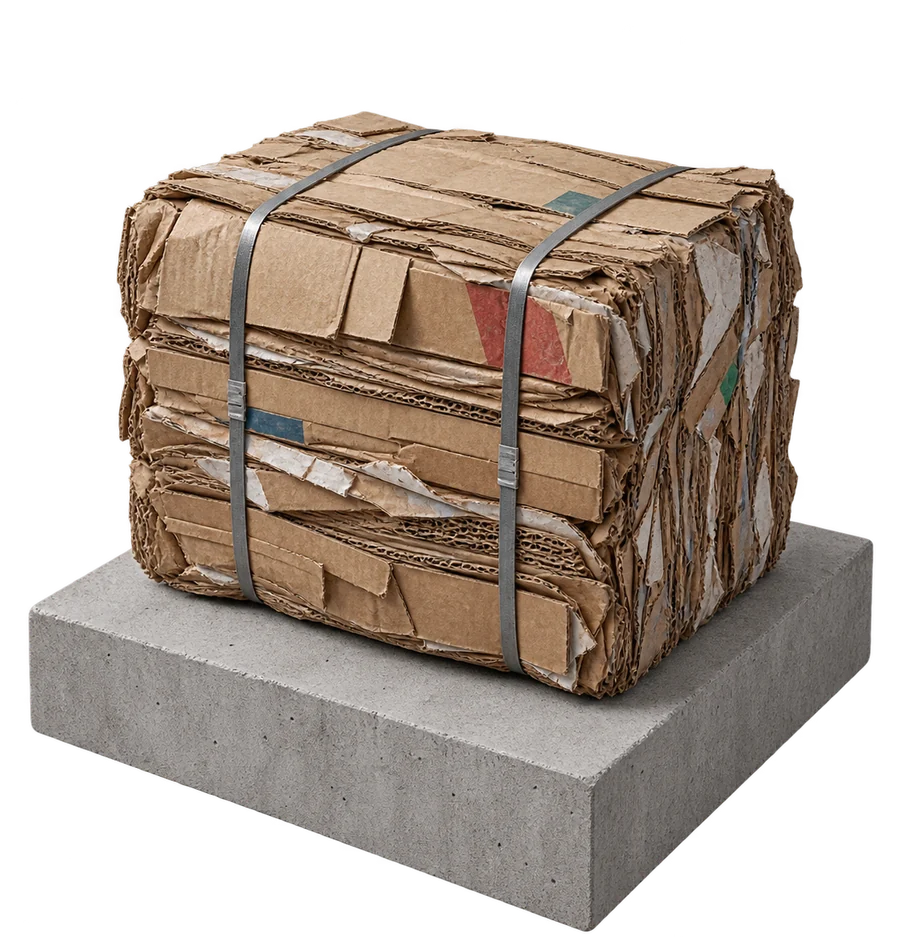
- Sort before you go. Cardboard, scrap metal, e-waste and batteries are free at most metro facilities. Hidden recyclables inside a mixed load are charged at the general rate.
- Know the minimum charge. Small loads are billed at the minimum regardless of weight; combining two half-loads into one trip usually saves the second minimum.
- Weight beats volume for dense waste. Where a facility offers per-tonne pricing on a weighbridge, soil, concrete and timber are usually cheaper by weight than by trailer size.
- Use resident vouchers. Several councils issue two or three free-disposal vouchers a year with the rates notice. They do not apply to commercial loads, but they do apply to the owner's own household waste.
- Green waste separately. On the 2026-27 schedule clean green waste and timber are $152.00 per tonne against $407.00 per tonne for rubbish, so separating it before you load is worth more than any other decision at this gate.
Sources
- Whitehorse City Council, Recycling and Waste Centre: items accepted at a charge (1 July 2026 to 30 June 2027)
- EPA Victoria, Waste levy rates 2026-27
Frequently asked questions
How much is a car boot at the Whitehorse tip?
What does Whitehorse Recycling and Waste Centre charge per tonne?
Is there a resident discount at the Whitehorse tip?
Where is the Whitehorse Recycling and Waste Centre?
Is tipping or a bin cheaper for a Whitehorse business?
Related guides
Related questions
Make the collection fit your materials.
Tell us which streams you separate, how much you generate and what your current service includes. We can help compare your options.
Review my recycling setup Explore recycling services