 Bundle Waste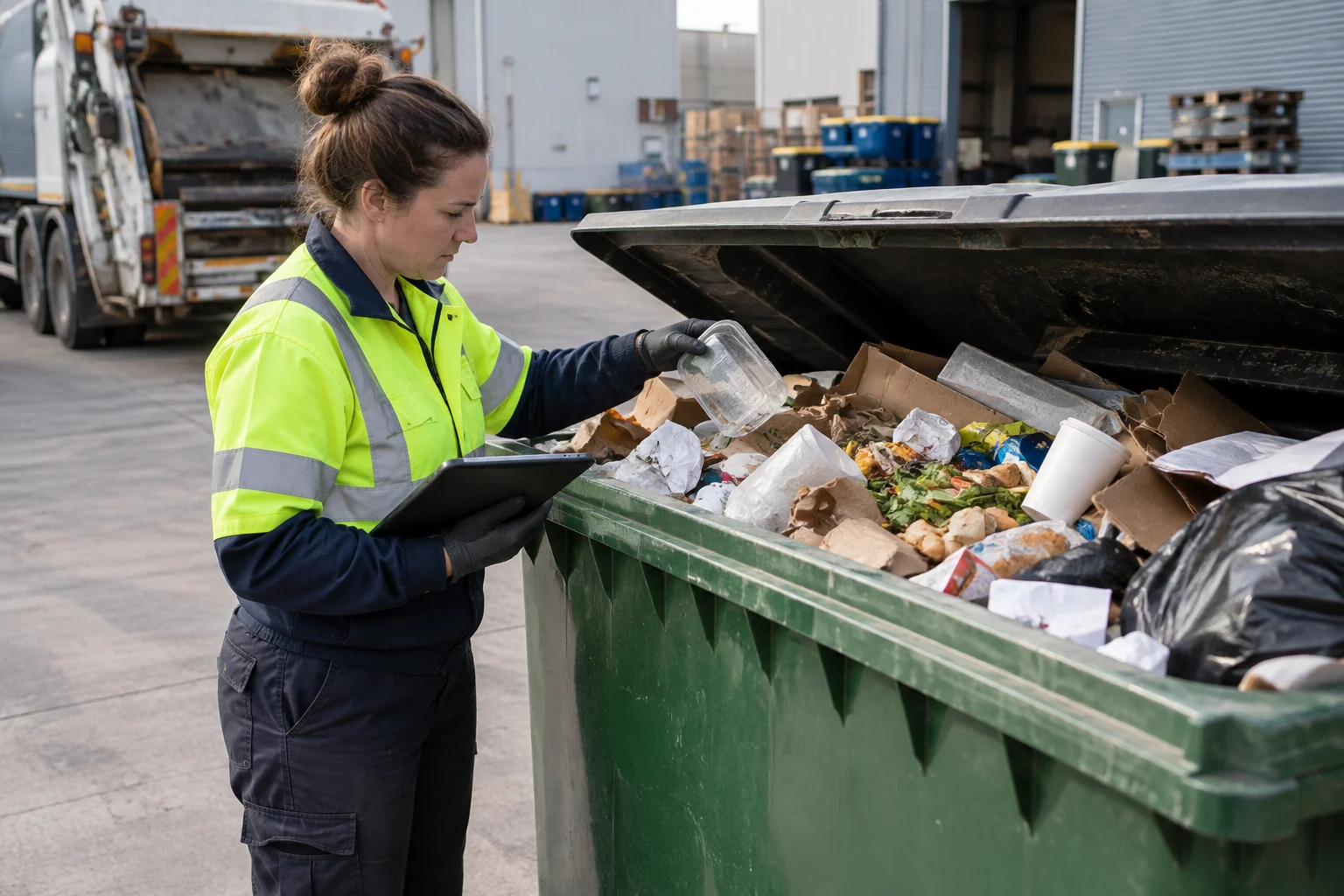
A contamination charge is what a waste provider bills when the wrong material is found in a bin: food in the cardboard bin, general waste in the commingled recycling, liquids or hazardous items anywhere. The charge usually has two parts. The load is re-classified and billed at the general-waste rate instead of the cheaper recycling rate, and a contamination or handling fee is added per incident, sometimes with an excess-weight charge on top (JJ's Waste & Recycling publishes $0.50 per kilogram over allowance in metropolitan Victoria). Because recycling is usually priced below general waste, a single contaminated recycling bin can cost more than a month of the saving it was meant to deliver.
How contamination is detected and billed
Drivers photograph bins at pickup and on the truck's camera; processors reject loads at the recycling facility. Either can trigger a charge. The typical sequence: the bin is tagged or photographed, the collection is rebilled at the general-waste rate, a contamination fee is added to the next invoice, and repeated incidents lead to the recycling service being cancelled and replaced with general waste, which costs more every single week thereafter.
| Component | How it is charged | Example |
|---|---|---|
| Re-classification | Recycling lift billed at general-waste rate | A 660L recycling bin becomes a 660L general-waste lift: $75–175 a month a month versus the recycling rate |
| Contamination or handling fee | Fixed fee per incident; on the provider's schedule | Ask for the schedule; it is rarely on the quote |
| Excess weight | Per kilogram over the bin's allowance | JJ's publishes $0.50 per kg (VIC metro), $0.52 (VIC regional) |
| Service downgrade | Recycling cancelled, replaced by general waste | The expensive outcome: every future lift at the higher rate |
What counts as contamination
- Commingled recycling: food and liquid residue, soft plastics, polystyrene, nappies, textiles, general rubbish bags.
- Cardboard and paper: waxed or wet cardboard, food packaging with residue, strapping, plastic film.
- Organics: plastic packaging, cutlery, glass, non-compostable coffee cups.
- Any bin: liquids, batteries, gas bottles, chemicals, hot ashes, asbestos.
The fixes that work
- Signage at eye level on the bin lid, with pictures not words, in the languages your staff read.
- Lock the bins in shared areas and laneways. Passers-by and neighbouring tenants are the most common source of contamination in strata and retail strips.
- Fewer, clearer streams. A site that cannot keep three streams clean should run two clean ones.
- Weekly lid check by one named person, with photos. It takes two minutes and it is what the driver does anyway.
- Dispute with evidence. Ask for the driver's photo. Charges without evidence are routinely reversed.
Our contamination costs guide goes deeper on training, and the recycling bin guide lists what belongs where.
Step one is a free waste audit: Bundle Waste benchmarks your last three invoices against the ranges above and against Melbourne service providers, then negotiates. No saving, no fee. Start the audit.
Sources
- JJ's Waste & Recycling, Fees & charges (effective 1 July 2026)
Frequently asked questions
What is a bin contamination charge?
How much does a contaminated recycling bin cost?
How do providers detect contamination?
Can I dispute a contamination charge?
What stops contamination on a business site?
Related guides
Make sense of your own waste setup.
Send your current invoice or tell us what your business needs. We can review the service, compare providers and help coordinate the next step.
Review my waste setup Compare your quote totals