Bundle Waste
To estimate the carbon footprint of business waste, record what material leaves your site, its weight and how it is treated. A recycling percentage alone cannot establish emissions or a carbon saving. Keep the calculation method and assumptions with any result you publish.
Start with a waste data record
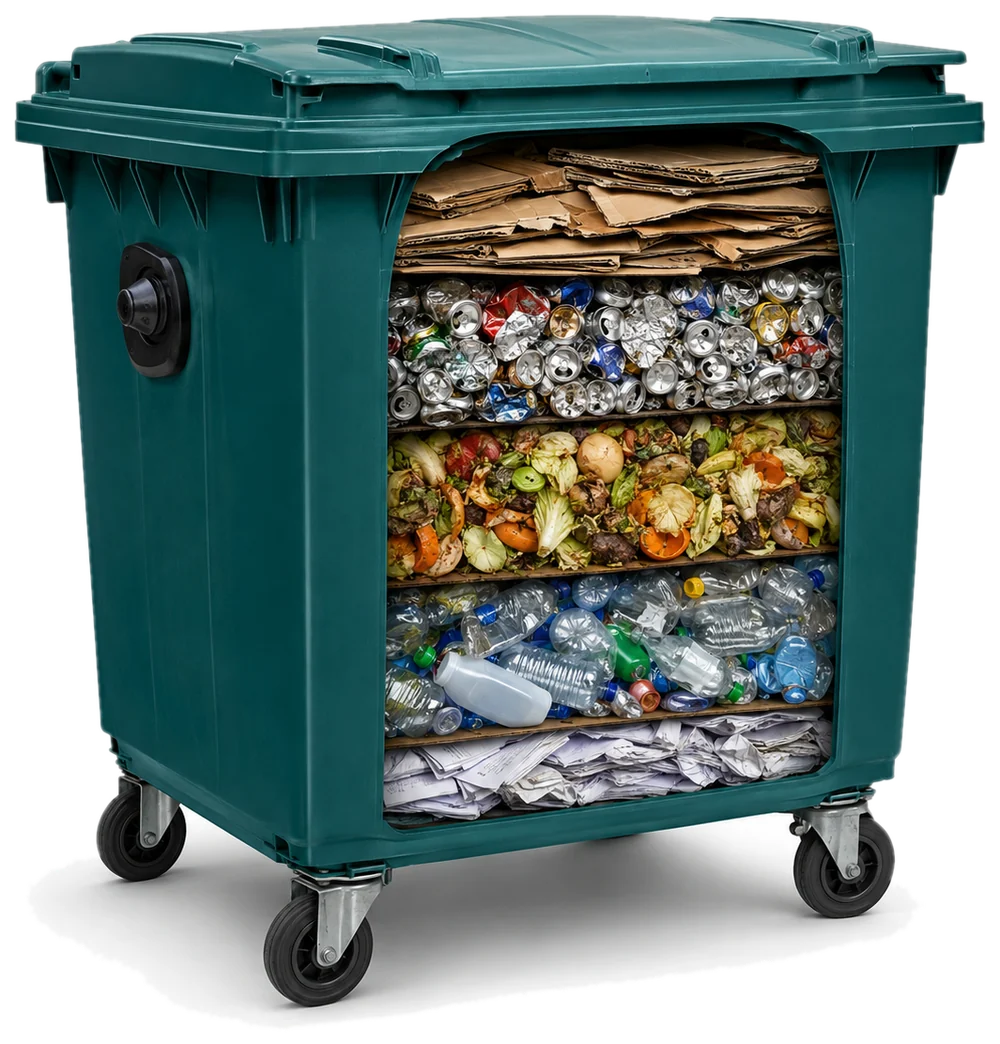
For each reporting period, record waste type, quantity, destination and treatment route. Ask whether weight is measured for your collection or estimated from another basis. Keep weighbridge tickets or provider reports and document gaps rather than silently converting litres into tonnes.
Where the provider supplies emissions figures, request the calculation boundary, factor source and version, assumptions and whether the figure relates to your material or a broader average.
Use an appropriate calculation method
The GHG Protocol Category 5 guidance describes methods using waste quantity, treatment and suitable emission factors. Choose a method that fits the available data and document why. Do not combine factors with different boundaries as though they measure the same thing.
Keep waste-management emissions separate from any wider claim about avoided virgin-material production unless your chosen methodology explicitly accounts for it. Have a qualified reporting adviser review material assumptions before using the result in a formal disclosure.
Do not confuse NGER with scope 3 reporting
The Clean Energy Regulator states that NGER covers scope 1 and scope 2; scope 3 emissions are not reportable under NGER. This does not determine whether a business has other reporting or customer requirements. Confirm the framework applicable to your organisation.
Compare changes without overstating results
If you introduce a new collection stream, record the baseline and new arrangement over comparable periods. Note changes in production, occupancy or trading hours. Distinguish measured waste reduction from a change in how waste is classified or reported.
Do not assume that doubling diversion halves emissions, or use an unsourced tonne-to-car-distance equivalence. Show the calculation, material composition and treatment assumptions behind an estimate.
Turn the results into an operating decision
Identify which streams deserve better measurement, which unnecessary material can be avoided and which collection arrangements need review. Assign an owner to each change and check the actual waste record afterwards.
For external sustainability copy, publish the reporting period, boundary, method and uncertainty beside the result. Describe an estimate as an estimate; do not present a scenario as a verified customer outcome.
Related guides
Sources
Checked 18 September 2026. Apply each source within its stated scope; site-specific approvals and quotes still need confirmation.
- GHG Protocol — Technical Guidance for Calculating Scope 3 Emissions: Category 5. Category 5 Waste Generated in Operations, calculation methods.
- Clean Energy Regulator — Emissions and energy types. Reporting emissions under NGER.