 Bundle Waste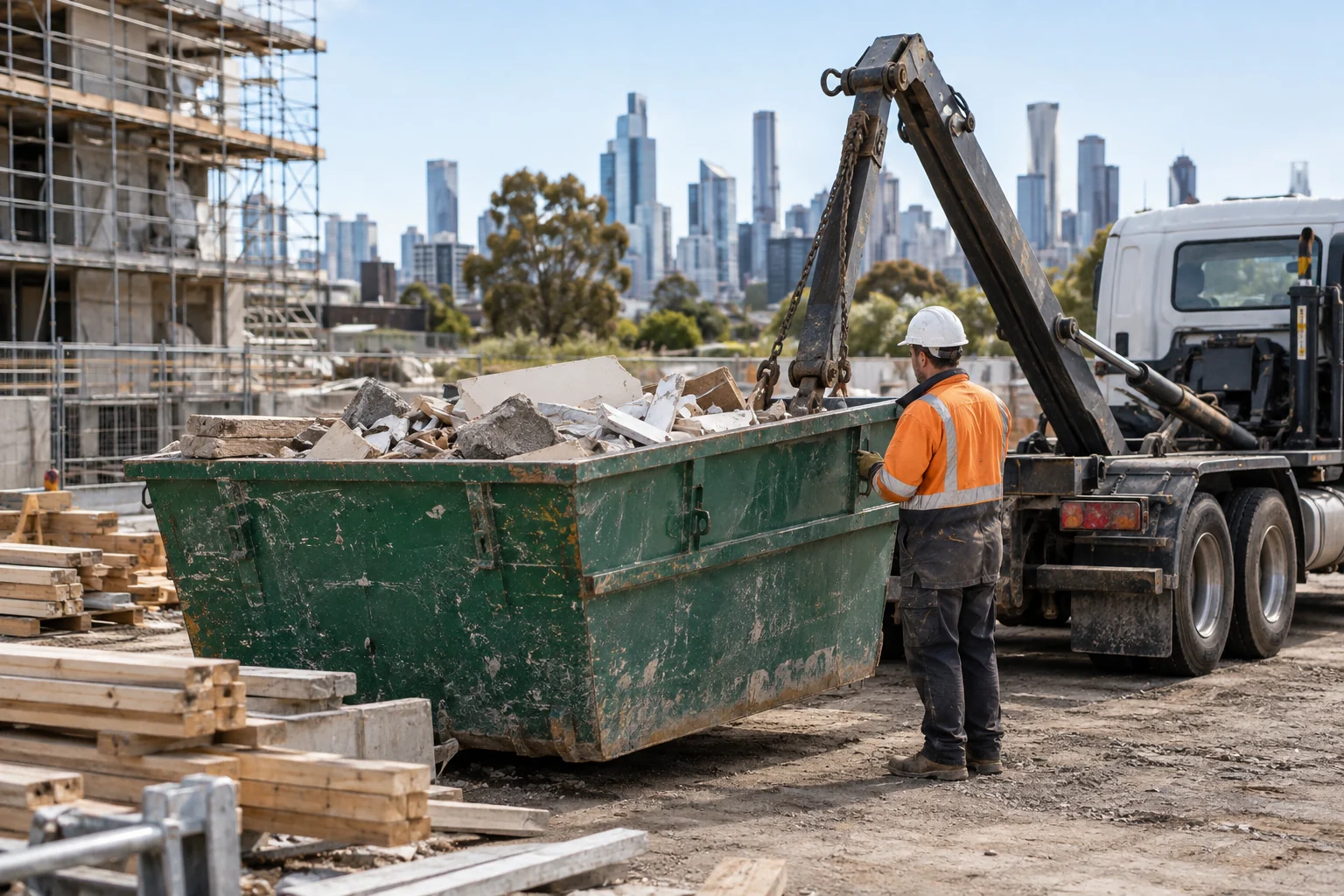
A construction waste quote should identify the material, container, hire period, weight allowance and disposal route. Compare the full project cost; an unsupported price per skip cannot establish what your job will cost.
Break the project into waste-producing stages
List demolition, excavation, construction and fit-out separately. Record the materials expected in each stage and which require investigation before handling. Ask the relevant specialist to assess suspected asbestos, contaminated soil or unknown residues rather than treating them as ordinary rubble.
Prepare a site plan showing possible bin positions and access. A separation proposal needs both an accepted destination and enough safe working space; it is not automatically the best option simply because there are more bins.
What drives the price of a quote
Two quotes for “a 10 cubic metre bin” can differ by more than the bin. The lines that move the total, roughly in order of how often they decide it:
- The weight allowance and the excess rate. Most quotes include a tonnage cap and charge per tonne above it. On concrete, brick and soil the bin fills by weight long before it fills by volume, so the excess rate is the number that matters.
- The declared waste class. What you say is going in determines where it can go, and therefore what the disposal component costs. A load that is reclassified on arrival is repriced on arrival.
- Container size and collection method. Skip, hook-lift and front-lift are different vehicles with different access requirements. Paying hook-lift rates for fit-out volumes, or swapping half-empty skips, is the most common avoidable cost on a site.
- Hire duration. Included days, then a daily rate. A container standing idle between stages is still being charged.
- Access and placement. Kerbside placement, permits, traffic management and restricted access windows all add cost or lost time.
- Surcharges. Contaminated or rejected loads, relocation, extra collections, fuel and environmental lines. Ask for them in the quote rather than on the invoice.
Request a price for a defined load
For each offer, specify materials, container capacity, included weight, hire days, delivery, removal and access restrictions. Request the excess-weight rate, rejected-load process, extended-hire costs and any required sampling or documentation.
Ask which facility is expected to receive the load and what evidence you receive after collection. Keep disposal and recovery documentation linked to the project stage and invoice.
The landfill levy behind C&D pricing
EPA Victoria states that a waste levy must be paid for all waste received at a landfill, and the rate depends on the disposal category and the premises. For 1 July 2026 to 30 June 2027, industrial waste at prescribed metropolitan premises is $177.19 per tonne, up from $169.79 in 2025-26. Rural (non-prescribed) premises are listed at $155.95 per tonne for industrial waste. Source: EPA Victoria — Waste levy.
As an illustration only, using the published rate and not a quote: a stage that sends two tonnes of mixed material to a metropolitan landfill carries $354.38 of levy at $177.19 per tonne, before the gate fee, the container, transport and GST. The point of the arithmetic is not the number — it is that the levy is charged on weight to landfill, so the tonnage you send there, not the bin you hire, is the lever.
The levy is paid by the landfill operator and reaches you inside the disposal component of the price. Ask which destination and classification a quoted disposal charge assumes, and do not multiply the levy by bin volume without a supported weight.
Where the waste class changes the cost
Because the levy applies to what is received at a landfill, the class of material in the container changes the disposal cost more than the choice of provider does:
- Clean concrete, brick and masonry. Routinely accepted for crushing and reuse as aggregate. Heavy, so the weight allowance matters, but it is not landfill tonnage if it goes to a recovery facility.
- Clean timber. Accepted for recovery by some facilities and not others; treated timber is handled differently again and can fall within priority waste. Confirm acceptance before you fill the bin.
- Scrap metal. Usually handled by metal recyclers rather than a waste bin. Ask what the return or charge is before letting it travel in a mixed load.
- Soil and fill. Cheap only if it is genuinely clean. Suspected contaminated soil needs assessment and may be priority or reportable priority waste with its own transport and destination requirements.
- Mixed construction and demolition waste. The container of last resort: whatever fraction is landfilled carries the levy, and one contaminating item can reclassify the load.
Confirm with the transporter and the receiving facility what each stream is accepted as. A material list from a different project is not evidence for yours.
Compare mixed and separated options
Ask for separate quotes for the configurations your site can support. Calculate extra container and collection costs alongside any lower processing charge. Do not assume that every mixed load goes directly to landfill or that every separated load earns a rebate.
If reporting recovery to a client, establish the measurement basis before work starts. Distinguish a facility-wide estimate from a record specific to your load, and do not describe collected tonnage as recycled tonnage without destination evidence.
How builders cut construction waste costs
- Separate the heavy streams first. Concrete, brick and clean timber are where tonnage sits. Where the site has room and an accepted destination exists, dedicated containers keep that weight out of the landfilled fraction.
- Match the container to the stage. Demolition and fit-out do not need the same equipment. Re-specify at each stage instead of leaving one container on site for the whole job.
- Put waste in the programme. Sequencing containers and streams to the build programme is what stops idle hire days and half-empty swaps. Our construction waste management plan guide sets out the structure.
- Watch the ancillary lines. Extended hire, relocation, contaminated-load surcharges and street placement permits accumulate quietly. Our guide to hidden fees on waste invoices covers what to question.
- Benchmark the standing account, not just the project. Builders re-quote each project and leave the ongoing account untouched for years. Both are worth comparing on the same basis.
Confirm the regulatory scope
EPA Victoria’s Understand your waste obligations and duties explains classification and lawful destinations: if you manage or control industrial waste you must classify it and meet the duties that apply to that classification, and the waste must be taken to a place that is authorised to receive it. Ask the transporter and receiver to identify the requirements applicable to your particular materials. This guide does not certify a waste classification or planning-permit condition.
Keep the project cost visible
Track ordered swaps, actual collections, hire extensions, weights and extra charges against the accepted quote. Investigate differences while the stage is still active. Compare the final project total with the forecast so the next estimate uses your own evidence.
Check placement with the relevant council or property manager and document who obtains any permission. Coordinate delivery and removal with the site manager so a price-saving change does not obstruct safe access.
Frequently asked questions
How much does a construction skip cost in Melbourne?
Why does mixed construction waste cost more than separated waste?
Is it worth having separate bins for concrete, timber and metal on site?
What should I check in a skip quote besides the price?
Do I need a waste management plan for a Melbourne construction project?
What happens to contaminated soil from a building site?
Related guides
Sources
Checked 18 September 2026, levy rates rechecked 21 September 2026. Source scope is stated below; practical checklists are recommendations, not verified market averages.
- EPA Victoria — Understand your waste obligations and duties. Industrial waste; Priority waste; Reportable priority waste. Checked 18 September 2026.
- EPA Victoria — Waste levy. Waste levy rates 2026-27, Tables 1 and 3; “A waste levy must be paid for all waste received at a landfill”. Checked 21 September 2026.